Walking through the aisles of your local supermarket in 2026, it’s hard not to notice the subtle shifts in your weekly grocery bill. Grocery prices in New Zealand continue to be a major talking point for families, expats, and anyone trying to stretch their budget. While food inflation has eased from the double-digit peaks of previous years, many Kiwis still feel the pressure at checkout.
If you’ve recently moved to New Zealand or you’re simply looking for smarter ways to shop, this guide breaks down real 2026 prices, regional differences, supermarket comparisons, and proven strategies to keep costs down without sacrificing quality.
Current State of Grocery Prices in New Zealand (2026 Update)
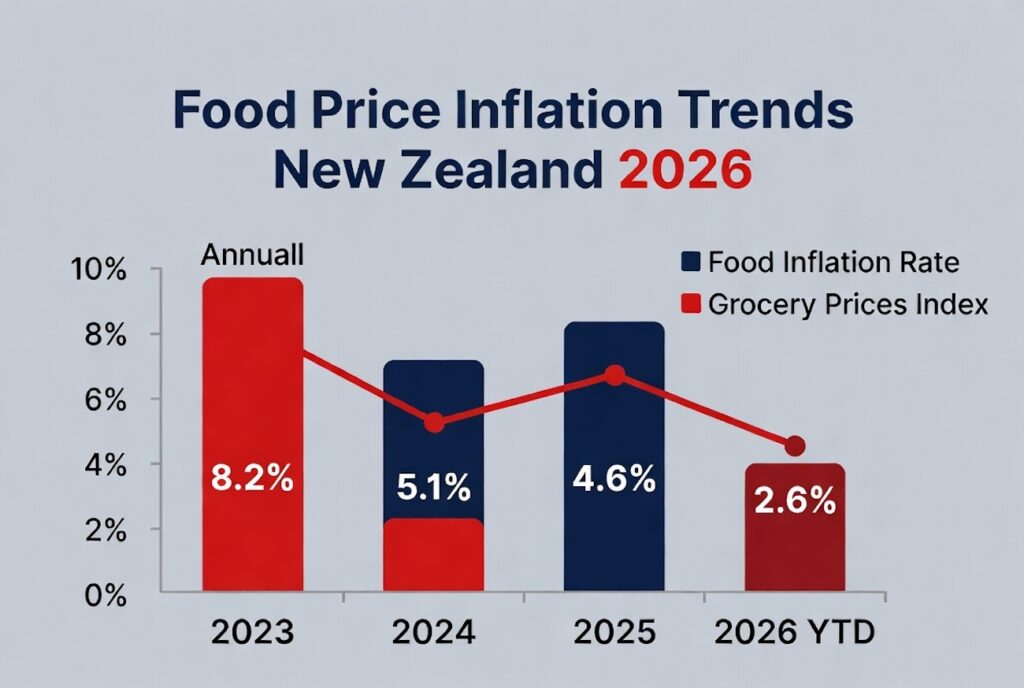
As of mid-2026, grocery prices in New Zealand show a mixed picture. Annual food inflation has moderated significantly, sitting at 2.6% in April 2026 – the lowest level in over a year.
This cooling comes after higher spikes earlier in the year, including a 4.6% annual increase recorded in January. Meat, poultry, and fish remain the biggest drivers of increases, while some categories like eggs and certain oils have actually decreased.
For everyday shoppers, this means prices are still elevated compared to 2022–2023 levels, but the rapid monthly jumps have slowed. A typical trolley of basics now costs noticeably more than it did a few years ago, particularly for imported items and protein.
Food Price Inflation Trends and Latest Stats NZ Data
Statistics New Zealand’s Food Price Index provides the most reliable snapshot. In the 12 months to January 2026, food prices rose 4.6%, with grocery foods up 4.0% and meat/poultry/fish jumping 8.9%.
By April 2026, the annual rate had eased to 2.6%. Fruit and vegetable prices, which surged earlier in the year, moderated, while meat prices continued climbing due to global supply constraints and strong export demand.
These trends matter because food makes up a large chunk of household spending. For many families, groceries represent the most flexible part of the budget – and the easiest place to make savings with the right habits.
Average Weekly Grocery Budgets by Household Type

Realistic budgets depend on location, shopping habits, and whether you prioritise premium or budget options. Based on recent household surveys and shopper reports in 2026:
- Single person: $90 – $130 per week
- Couple (no kids): $150 – $200 per week
- Family of 4 (2 adults + 2 children): $200 – $280 per week
- Larger family (3+ children): $280 – $380 per week
These figures assume mostly home cooking and shopping at cheaper outlets like Pak’n’Save. Families who frequently buy pre-prepared meals or shop at premium stores often exceed $300–$350 weekly.
Real example: Sarah, a mother of two in Christchurch, keeps her family’s weekly shop around $230 by sticking to seasonal produce, own-brand items, and strict meal planning. When she slips into convenience buying, it quickly jumps to $280+.
To understand how these grocery costs fit into the bigger picture, check out our full cost of living breakdown.
Supermarket Comparison: Pak’n’Save vs Woolworths vs New World

New Zealand’s supermarket scene is dominated by two main players, but the price differences are real:
- Pak’n’Save: Consistently the cheapest option. Shoppers typically save 10–15% compared to competitors on a full trolley. No-frills shopping with bulk options and strong specials.
- Woolworths (formerly Countdown): Mid-range pricing with better convenience, more staff, and frequent targeted discounts via the Onecard app.
- New World: Premium experience with higher prices, wider gourmet range, and excellent fresh produce sections. Best for special occasions rather than weekly shops.
Recent basket comparisons show Pak’n’Save often $20–$50 cheaper for a family shop versus Woolworths or New World.
Pro tip: Use each store’s weekly specials and price-check apps to mix and match.
Detailed Price Breakdown – Everyday Essentials (May 2026 Averages)
Here’s what you can expect to pay across major categories (prices approximate and vary by location and specials):
Dairy & Bakery
- 1L milk (standard): $2.50 – $3.50
- Loaf of bread (white sandwich): $2.80 – $4.50
- Dozen eggs: $7.00 – $10.50
- 500g butter: $7.50 – $9.50
Meat & Protein
- Chicken breast (per kg): $13 – $18
- Beef mince (per kg): $12 – $16 (premium cuts significantly higher)
- Lamb chops or leg (seasonal, per kg): $18 – $25+
- Fish fillets (e.g., hoki or salmon): $18 – $28/kg
Fruit & Vegetables
- Apples (1kg, seasonal): $3.50 – $5.50
- Bananas (1kg): $3.00 – $4.00
- Potatoes (1kg): $2.50 – $4.00
- Tomatoes (1kg): $6.00 – $9.00
- Broccoli or cauliflower head: $3.50 – $5.50
Pantry Staples
- 1kg rice: $3.50 – $5.00
- 400g pasta: $1.80 – $3.00
- Cheese (500g block): $7 – $10
- Olive oil (1L): $12 – $18 (prices have eased recently)
These are mid-range figures. Buying own-brand (Pams, Homebrand, or Woolworths Select) can reduce costs by 20–30% on many items.
Regional Differences: Auckland, Wellington, Christchurch & Beyond
Grocery prices in New Zealand vary noticeably by region:
- Auckland: 5–12% more expensive than average due to higher operating costs and demand. Expect the upper end of price ranges.
- Wellington: Similar to Auckland but slightly cheaper on fresh produce thanks to closer supply chains.
- Christchurch & South Island: Often the most affordable, especially in regional towns with direct farmer access.
- Smaller towns & rural areas: Can be higher due to transport costs, but farmers’ markets and local butchers help balance this.
Combining grocery costs with other expenses like housing makes a big difference – see how they stack up in different cities in our rent cost breakdown by city.
Why Are Grocery Prices High in New Zealand?
Several structural factors keep prices elevated:
- The supermarket duopoly limits competition.
- High export focus on premium dairy and meat means Kiwis often pay near-global prices for local products.
- Import reliance for pantry staples, combined with shipping and fuel costs.
- Labour shortages and rising wages across the supply chain.
- Weather events and global commodity fluctuations.
For the latest official figures, visit the Stats NZ Food Price Index.
Practical Tips to Slash Your Grocery Bill in 2026

- Shop seasonal – Kiwi fruit, apples, and stone fruit drop dramatically when in season.
- Buy own-brand – Often identical quality to name brands at lower cost.
- Meal plan ruthlessly – Reduces waste and impulse buys.
- Use loyalty apps – Onecard, Fly Buys, and supermarket apps unlock targeted discounts.
- Visit farmers’ markets – Great for fresh produce at better prices.
- Bulk buy staples – Rice, pasta, oats, and frozen vegetables when on special.
- Reduce meat – Incorporate more legume- and vegetable-based meals.
Small changes add up fast. One family I spoke with saved over $60 a week simply by switching to Pak’n’Save and planning meals around specials.
Shopping Strategies for Expats and New Migrants
New arrivals often compare prices to their home countries and feel sticker shock. Focus on local strengths: affordable dairy when on special, seasonal produce, and budget proteins like chicken or lentils.
Link your shopping to income realities by checking how minimum wage compares to grocery costs and our guide to average salaries in New Zealand.
Future Outlook for Grocery Prices 2026–2027
Economists expect food inflation to remain moderate, potentially settling below 3% by late 2026 if global supply chains stabilise. Increased competition or government intervention could help, but don’t expect prices to drop significantly – the focus is on slower growth.
Frequently Asked Questions
How much should I budget for groceries in New Zealand in 2026?
A single person can manage comfortably on $90–$130 weekly with smart shopping. A family of four typically spends $200–$280. These are achievable targets at budget supermarkets.
Which supermarket has the lowest grocery prices in New Zealand?
Pak’n’Save is widely regarded as the cheapest for a full weekly shop, often saving shoppers $20–$50 compared to Woolworths or New World.
Are grocery prices higher in Auckland?
Yes, Auckland is typically 5–12% more expensive than Christchurch or regional areas due to higher demand and costs.
Why have meat prices increased so much?
Strong export demand, global supply issues, and rising production costs have pushed meat, poultry, and fish prices up around 7–9% annually in recent periods.
How can I track changing grocery prices effectively?
Follow the Stats NZ Food Price Index, use supermarket apps for specials, and compare baskets regularly with tools like Grocer.nz.