Updated 8 November 2026. Licence, toll and freedom camping rules checked against NZTA, DOC and MBIE.
Tourists driving in New Zealand, the quick answer: yes, tourists can drive in New Zealand on a current overseas licence for up to 12 months from arrival. If your licence isn’t in English, carry an International Driving Permit (IDP) or an approved translation with it. Rental companies set their own age and licence rules. To freedom camp in a campervan, it must be certified self-contained with a green warrant. New Zealand has three toll roads, and you have 10 days to pay.

This guide is for visitors planning a road trip. It covers licences, rental cars and campervans, freedom camping, tolls, ferries between the islands and realistic driving times. If you’re moving here to live or work, our guide to driving in New Zealand for foreigners living here covers converting your licence and owning a car.
On this page
Can tourists drive in New Zealand on an overseas licence?
Yes. Tourists driving in New Zealand can use their own licence, as long as:
- it’s current and valid for the type of vehicle you’re driving
- you haven’t been disqualified or suspended in New Zealand
- you carry it whenever you drive.
| You last arrived in NZ… | You can drive on your overseas licence for |
|---|---|
| Before 1 November 2026 | 18 months (car licences) |
| On or after 1 November 2026 | 12 months |
Do you need an International Driving Permit?
Only if your licence isn’t in English. Then you need an IDP or an accurate English translation (from an NZTA-approved translator, your embassy or the licence issuer), carried with your licence. Get your IDP before you travel, because it can’t be issued in New Zealand for an overseas licence. Full details: International Driving Permit NZ guide.
Renting a car or campervan
The law only says your licence must be valid. Rental companies add their own rules, which vary, so check before you book:
- Minimum age and licence history: often 21+ and a full licence held for a year or more. Younger drivers may pay extra or be refused.
- Bond and payment: most companies want a credit card in the main driver’s name.
- Insurance excess: basic cover often comes with a high excess. Compare the cost of reducing it with your travel insurance.
- Road restrictions: many agreements exclude unsealed (gravel) roads, beaches and some specific routes. Breaking these terms can void your cover.
- Peak season: December to February, Easter and school holidays book out early, especially campervans. See our 2027 public holidays guide for long weekends.
Campervans and freedom camping
Freedom camping means staying the night outside a campground. The rules tightened recently:
- To freedom camp on council land, a vehicle generally has to be certified self-contained, with a fixed toilet, and carry the new green warrant. Rental vehicles have needed one since 7 December 2024, and private vehicles since 7 June 2026.
- Vehicles with only a portable toilet can no longer be certified self-contained.
- On DOC (conservation) land, you can generally freedom camp except where it’s prohibited or restricted. Many sites are “self-contained vehicles only”, and camping isn’t allowed in most scenic and recreation reserves.
- Councils set their own rules on where and for how long. Always check the signs and the local council’s website.
- Breaking freedom camping rules can mean a $400 infringement fine. If you’re in a rental, the company will usually pass it on.
Not self-contained? Stay at holiday parks, commercial campgrounds or DOC campsites instead. They’re plentiful and often better located anyway. Sources: MBIE freedom camping and DOC.
Toll roads
New Zealand has only three toll roads. There are no toll booths: cameras read your number plate. Each has a signposted free alternative route.
| Toll road | Where | Car toll per trip |
|---|---|---|
| Northern Gateway | SH1 north of Auckland (Silverdale to Pūhoi) | $2.60 |
| Tauranga Eastern Link | SH2 between Pāpāmoa and Paengaroa | $2.30 |
| Takitimu Drive | Tauranga, SH29 to SH2 | $2.10 |
You can pay online up to 10 days after using the road. In a rental car, check your agreement first: some companies want you to pay the toll yourself, others include tolls or charge them later with an admin fee. See NZTA’s tolls and rental vehicles page.
Taking a car between the North and South Islands
Vehicle ferries cross Cook Strait between Wellington and Picton. Rental companies handle this differently. Some let you take the car on the ferry, while others ask you to drop it off in Wellington and pick up another in Picton, which is often cheaper. Check the policy, and book ferry space early in summer.
For current timetables, prices and which rental companies let their cars cross, see our guide to the car ferry from Wellington to Picton.
How long does it take to drive around New Zealand?
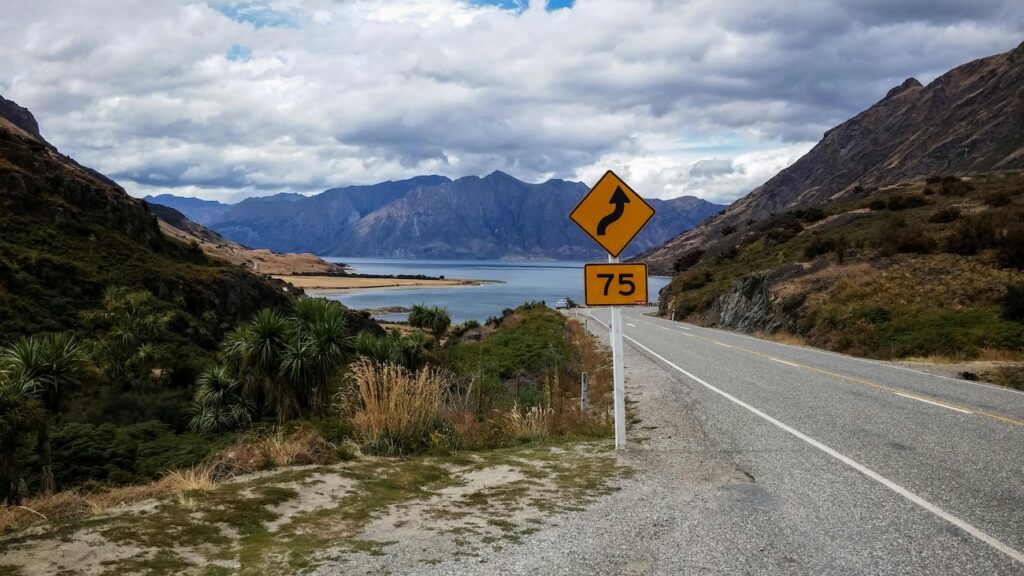
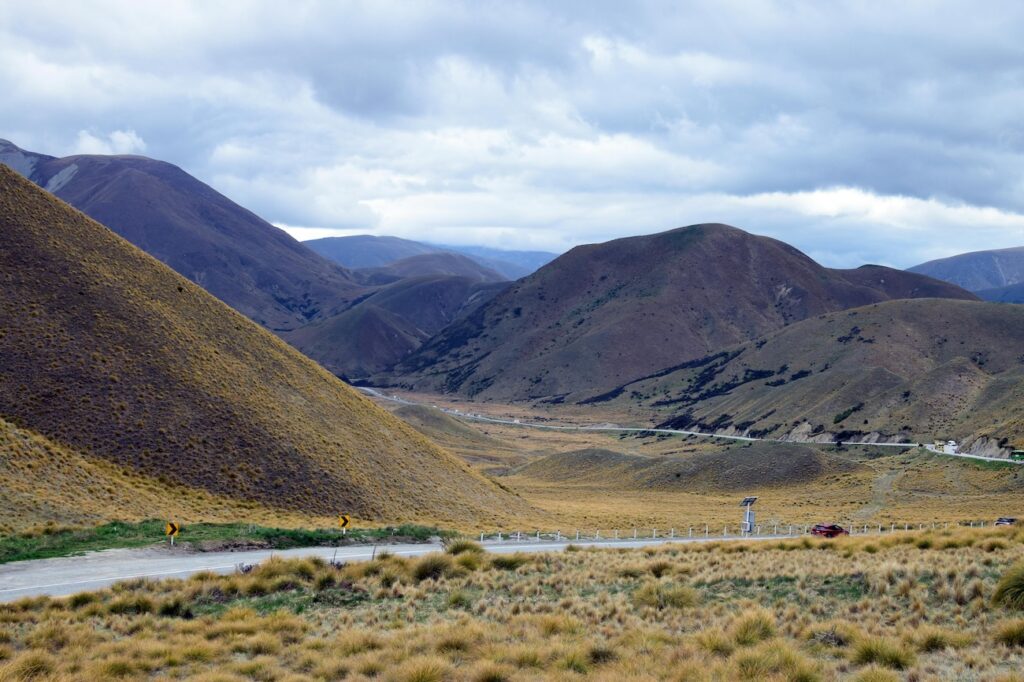
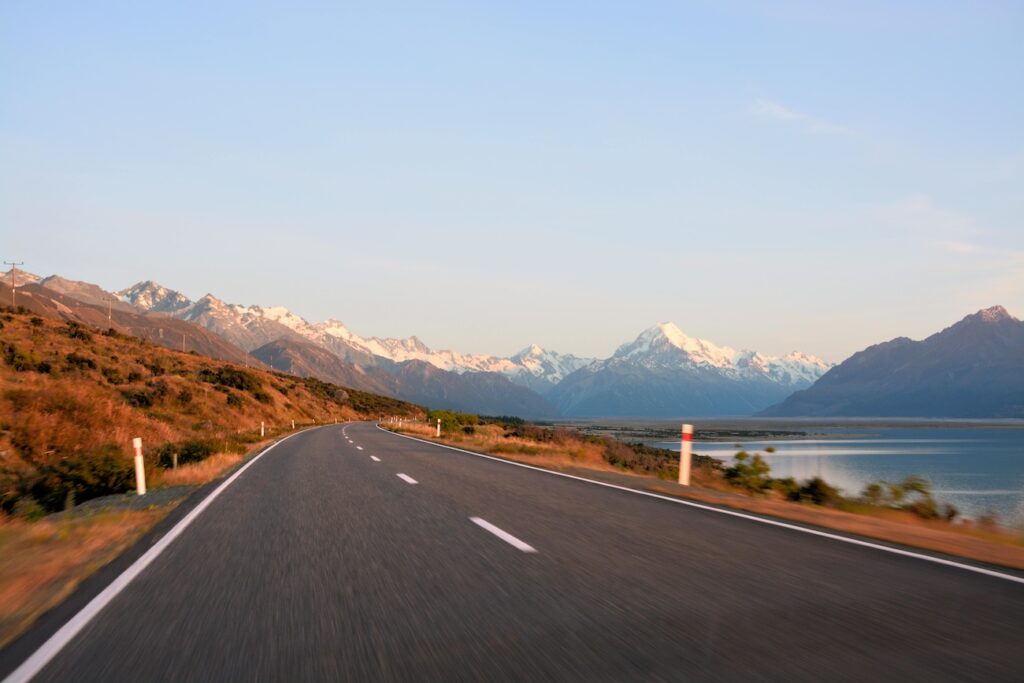
Distances look short on a map, but winding roads, hills, one-lane bridges and stops for photos add up. Rough guide times without stops:
| Route | Approximate driving time |
|---|---|
| Auckland to Rotorua | About 3 hours |
| Auckland to Wellington | About 8 hours |
| Christchurch to Queenstown | About 6 hours |
| Queenstown to Milford Sound | About 4 hours each way |
Plan no more than 4–5 hours of driving a day, take a break every two hours, and avoid long drives straight after a long-haul flight. Looking for a first stop? Try our Rotorua guide.
Road rules every tourist should know
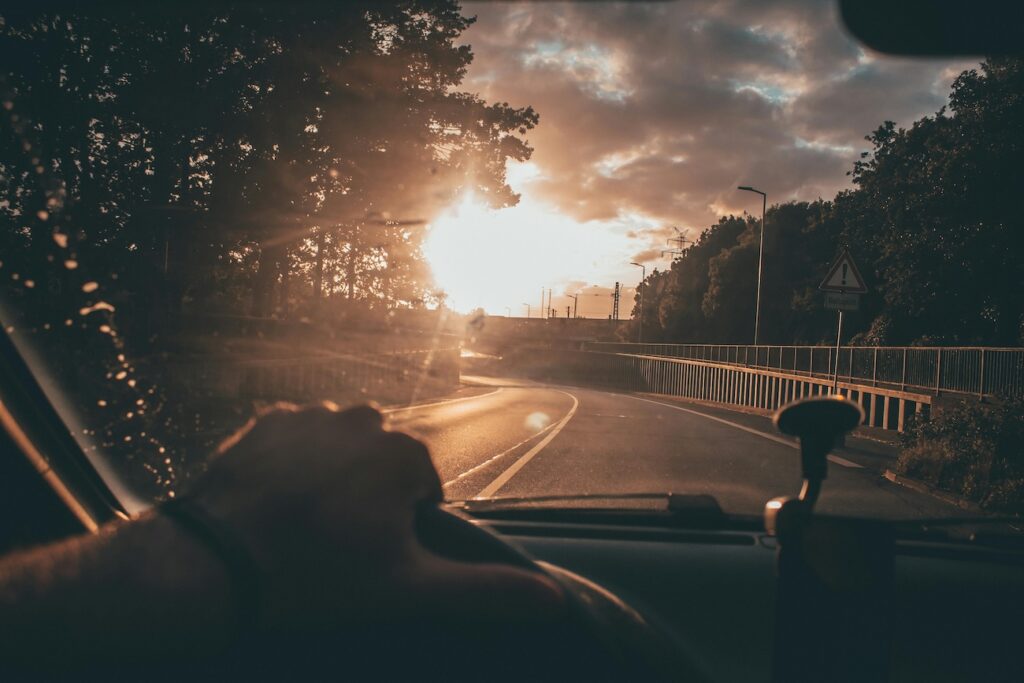
- Drive on the left. Take it slow on day one, especially when turning and leaving car parks.
- If you’re turning, give way to all traffic that isn’t turning. At roundabouts, give way to vehicles coming from your right.
- Speed limits are in km/h: usually 100 on the open road and 50 in towns. Check the signs.
- Pull over when it’s safe to let queues of traffic pass, and use slow vehicle bays.
- No hand-held phones, even at the lights.
- Alcohol limit: zero if you’re under 20. Police also do roadside drug tests.
The full list, with what surprises visitors most, is in our guide to New Zealand road rules.
Safety tips for a New Zealand road trip
- Check the weather and road conditions before crossing alpine passes, especially in winter. Our NZ weather guide explains the seasons.
- Fill up when you can. Some rural and West Coast stretches have long gaps between petrol stations. Budget for the trip with our fuel cost calculator.
- Pack insect repellent for the South Island’s West Coast and Fiordland, where sandflies are at their worst. Our guide to sandflies in New Zealand covers which repellents actually work.
- Expect patchy mobile coverage in remote areas, and download offline maps.
- In an emergency, call 111. For non-urgent traffic incidents, call *555 from a mobile.
FAQs
Can tourists drive in New Zealand?
Yes. You can drive on a current, valid overseas licence for up to 12 months from your most recent arrival, as long as you carry it with you. If it is not in English, you also need an IDP or an approved English translation.
Do US tourists need an international driving permit in New Zealand?
No, a valid US licence is in English, so it is enough on its own. Rental companies may have their own requirements, so check when you book.
How old do you have to be to rent a car in New Zealand?
It depends on the rental company. Many require drivers to be 21 or older and to have held a full licence for at least a year. Younger drivers may pay a surcharge or be refused.
Can you freedom camp in a rental campervan in NZ?
Only if it is certified self-contained with a green warrant, and only where local rules allow it. Otherwise stay at holiday parks, campgrounds or DOC campsites.
How do I pay tolls in a rental car in New Zealand?
Check your rental agreement first. Some companies want you to pay the toll yourself online within 10 days, while others include tolls or charge them to you later, often with a fee.
Can I take a rental car on the Cook Strait ferry?
Some rental companies allow it and others require you to swap cars between Wellington and Picton. Check your company’s policy before booking the ferry.
How long does it take to drive from Auckland to Wellington?
About 8 hours without stops. Most visitors split the trip over two days or more.
Which side of the road do you drive on in New Zealand?
The left. The driver sits on the right-hand side of the car.
Sources
- NZTA – Time limit for driving on an overseas licence
- NZTA – Approved translators
- NZTA – Where the toll roads are
- NZTA – Toll roads and rental vehicles
- MBIE – Freedom camping changes
- DOC – Freedom camping

Written by Alex · Founder, NZ Life Help
Alex moved to New Zealand from the UK in 2019 and has lived in Auckland and the South Island. He started NZ Life Help in 2026 to give newcomers and locals the clear, practical answers he couldn’t find when he arrived. Guides are checked against official sources and updated when the rules change.