Updated 8 November 2026. Every rule checked against the official NZTA road code and NZ Police.
Quick answer: In New Zealand you drive on the left. If you’re turning, you give way to all traffic that isn’t turning, and right-turners also give way to oncoming left-turners. The open road limit is 100 km/h, and slow drivers must pull over to let queues pass. Hand-held phones are banned even at traffic lights. The alcohol limit is zero for under-20s, and Police now do roadside drug tests. Watch for one-lane bridges and give way when the red circle sign tells you to.

Most New Zealand road rules will feel familiar, but a handful regularly catch out visitors and new arrivals, even experienced drivers. Here are the 15 that matter most, with what the official road code actually says. Check whether your licence lets you drive here first: see our International Driving Permit guide.
On this page
1. Keep left, and stay in the left lane
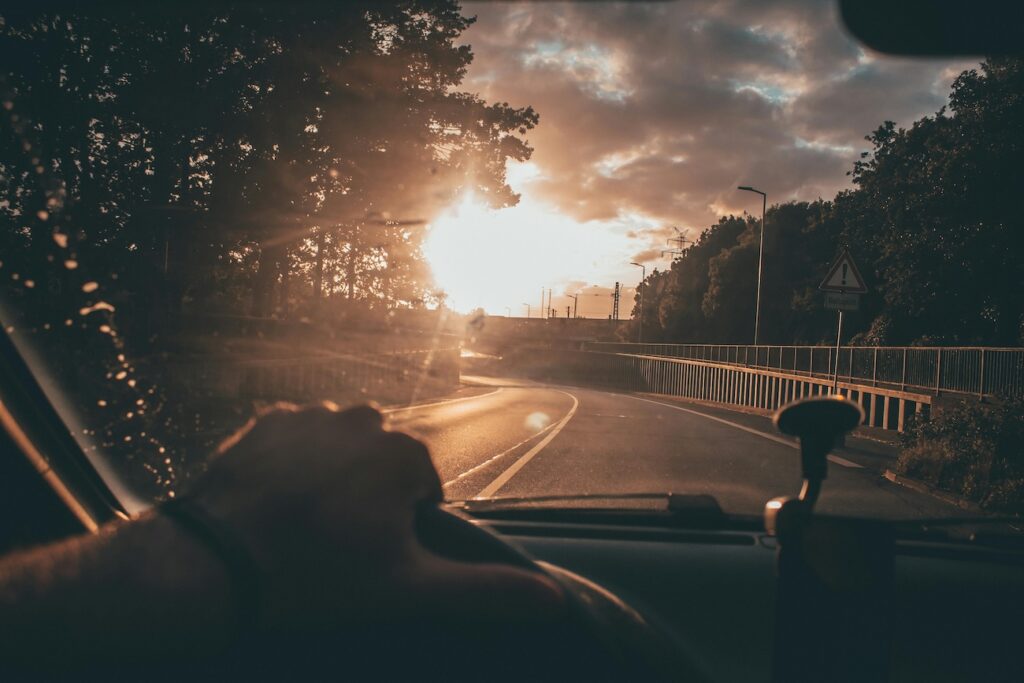
Vehicles drive on the left, and the driver sits on the right. On roads with two or more lanes your way, keep to the left-hand lane. Only use the right lane to pass, to turn right, or when the left lane is full or blocked. The most dangerous moments are pulling out of car parks, turning onto empty rural roads, and the first drive after a long flight, so take it slow on day one.
2. Turning traffic gives way to traffic that isn’t turning
This is the core give way rule: if you’re turning, give way to all traffic that isn’t turning. It includes cyclists and e-scooters in cycle lanes and vehicles in bus lanes.
The one that surprises people: if you’re turning right, you give way to oncoming vehicles turning left. This applies even when you both face the same give way sign, stop sign or green light.
3. The bottom of the T gives way
At a T-intersection, if you’re on the road that ends (the bottom of the T), give way to all traffic on the road that continues. The same applies when coming out of a driveway, where you also give way to people on the footpath or a cycle path. In other situations, such as an uncontrolled crossroads or traffic lights flashing yellow, give way to your right.
4. Roundabouts: give way to your right
As you enter a roundabout, give way to all vehicles that will cross your path from your right. Traffic goes clockwise, keeping left of the island. Signalling is compulsory and specific:
- First exit (turning left): signal left as you approach.
- More than halfway round: signal right as you approach, then signal left as you pass the exit before yours.
- Multi-lane roundabouts: pick your lane from the arrows before you enter, and give way to anyone in the lane you need to move into to exit.
5. Give way to buses pulling out
On roads with a speed limit of 60 km/h or less, you must give way to a bus pulling out from a stop, the roadside or a bus lane once it has signalled. The bus must indicate for at least 3 seconds first.
6. One-lane bridges
New Zealand has lots of one-lane bridges, especially on the West Coast and other rural routes. They’re always signposted:
- A red circle sign (often with a yellow diamond warning first) means you must give way to vehicles coming the other way.
- A blue rectangle with a big white arrow means you have priority, but slow down and check nobody is already on the bridge.
Some longer one-lane bridges have passing bays. If in doubt, stop and let the other driver go.
7. Speed limits: 100 km/h is the maximum on most roads
| Where | Limit |
|---|---|
| Open road (unless signposted otherwise) | 100 km/h. A few expressways are signposted 110 km/h |
| Towns and cities | Usually 50 km/h, but always check the signs |
| Light vehicles towing a trailer or caravan | 90 km/h maximum |
| School zones when the sign is active | 30 or 40 km/h (the red ring flashes) |
| Passing a stopped school bus, in either direction | 20 km/h |
| Passing a crash or emergency scene | 20 km/h or less |
A speed limit is a maximum, not a target. You must drive slower if the road, traffic or weather makes the limit unsafe. Going more than 40 km/h over a permanent limit means an automatic 28-day licence suspension.
8. Slow drivers must pull over
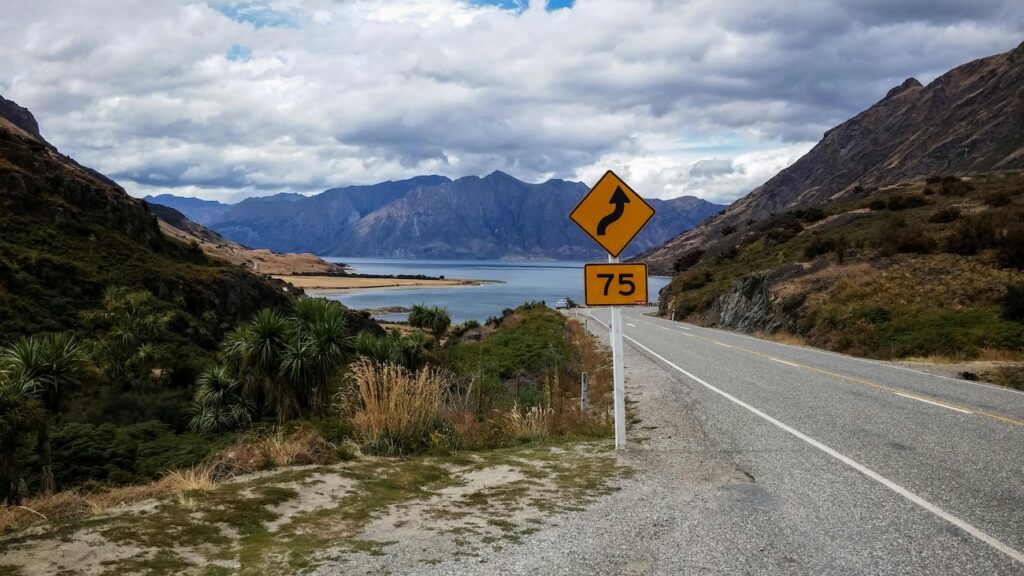
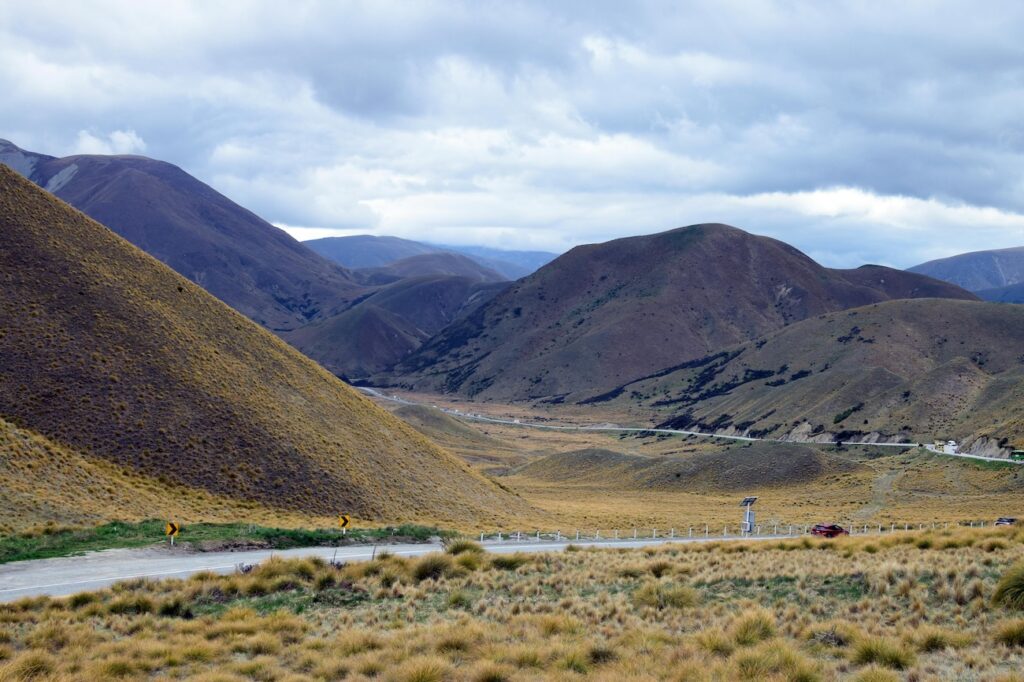
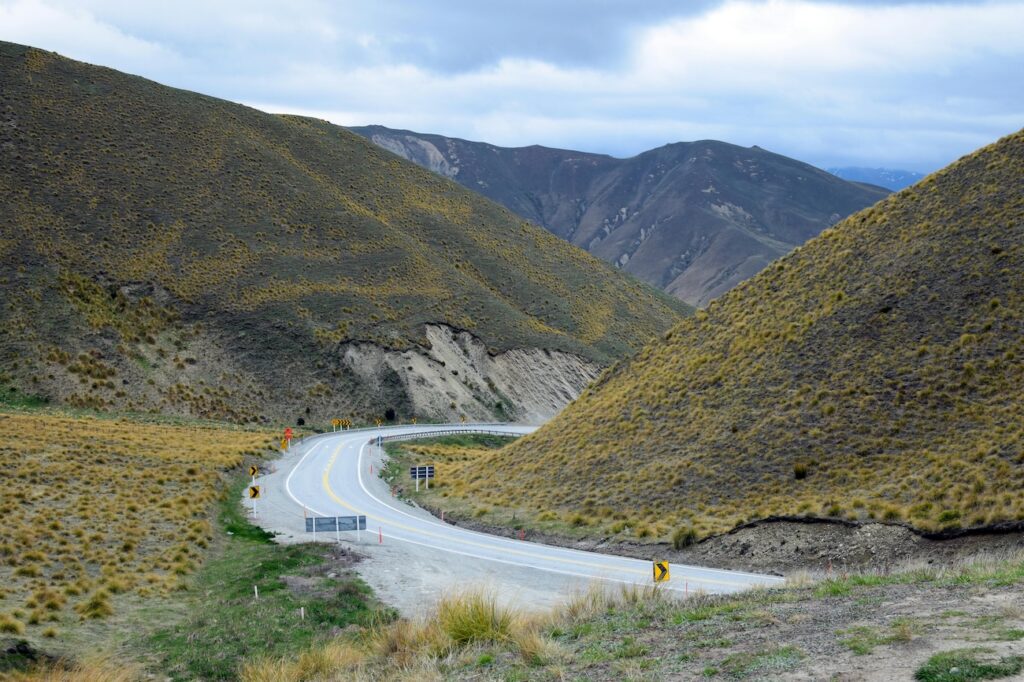
This one surprises a lot of visitors. If you’re driving below the limit and vehicles are queuing behind you, the road code says you must keep left and pull over as soon as it’s safe to let them pass. Don’t speed up on straight stretches to stop people overtaking. Scenic routes are winding, and local drivers know them well, so use the slow vehicle bays.
9. Never cross a solid yellow line to pass
A solid yellow line on your side of the centre line is a no-passing line. You must not cross it to overtake, usually because hills or curves hide oncoming traffic. A broken yellow line means a no-passing line is about to start, so you can finish an overtake over it but not begin one. Use the frequent passing lanes instead.
10. No phones in your hand, even at the lights
You can’t use a hand-held phone to call, text, browse or use apps while driving. That includes when you’re stopped in traffic or at traffic lights. Calls are allowed only if the phone is mounted in a fixed cradle and you use it rarely and briefly. You can call 111 or *555 if it’s unsafe to pull over. Using a phone while driving earns 20 demerit points and a fine. Set up your navigation before you set off.
11. Alcohol limits depend on your age
| Driver | Legal limit |
|---|---|
| Under 20 | Zero. Even one drink can mean a drink-driving charge |
| 20 and over | 250 micrograms per litre of breath, or 50 mg per 100 ml of blood |
Police can stop and breath-test any driver at any time, including at checkpoints that commonly appear on main roads over weekends and holidays. It’s impossible to say how many drinks puts you over the limit, so the best advice is not to drink and drive at all.
12. Roadside drug testing is now in place
Police began roadside oral fluid (saliva) drug testing in Wellington on 15 December 2025, with a national rollout from April 2026. The roadside test screens for THC (cannabis), methamphetamine, MDMA and cocaine. Two positive roadside screens mean you’re forbidden from driving for 12 hours, and penalties follow a positive lab test. Some prescription medicines can also affect your driving, so ask your doctor or pharmacist if you’re unsure.
13. Give cyclists 1.5 metres
When passing a cyclist travelling in the same direction in the same lane, you must leave at least 1.5 metres. If you can’t, slow down and wait. Many rural roads have no shoulder, so this often means waiting for a clear straight.
14. Seatbelts and child seats
Everyone must wear a seatbelt. Children under 7 must be in an approved child restraint, and 7-year-olds must use one if it’s available. If you’re hiring a car, book child seats in advance.
15. Red means stop, with no turning on red
Unlike in parts of North America, you can’t turn on a red light in New Zealand, left or right, unless a green arrow tells you to. A yellow light means stop unless you’re too close to stop safely. When signals flash yellow they’re not working, and the normal give way rules apply.
Beyond the New Zealand road rules: practical driving tips
- Allow more time than the map says. Distances look short, but winding roads, hills and one-lane bridges slow you down. Plan breaks every two hours to fight fatigue.
- Gravel (unsealed) roads: slow down, increase your following distance and avoid sudden braking. Check your rental agreement, because some exclude unsealed or specific roads.
- Winter driving: alpine roads in the South Island can be icy, and chains may be required. Check NZTA road conditions before you go, and see our NZ weather guide.
- Livestock and wildlife: farmers move stock along rural roads. Stop and let them pass.
- Long weekends mean busy roads and more Police checks. See our 2027 public holidays guide to plan around them.
- Carry your licence whenever you drive.
Staying longer? Read our guides to driving in New Zealand for foreigners, buying a car, the Warrant of Fitness and car insurance. When your overseas licence time limit runs out, see our licence conversion guide.
FAQs
What side of the road do you drive on in New Zealand?
The left. The driver sits on the right side of the car, and on multi-lane roads you keep to the left lane unless you are passing or turning right.
What is the speed limit in New Zealand?
The maximum open road speed limit is 100 km/h, with a few expressways signposted 110 km/h. Towns are usually 50 km/h. Light vehicles towing trailers are limited to 90 km/h.
Who gives way when turning right in NZ?
If you are turning right, you give way to all traffic that is not turning and to oncoming vehicles that are turning left, even when you both face the same sign or green light.
Can you turn left on a red light in New Zealand?
No. A red light means stop. You can only turn when the light is green or a green arrow shows for your direction.
What is the drink driving limit in NZ?
Zero for drivers under 20. For drivers 20 and over, the limit is 250 micrograms of alcohol per litre of breath or 50 mg per 100 ml of blood.
Is it legal to use a phone while driving in NZ?
Not hand-held, even when stopped at traffic lights. Calls are allowed only with the phone secured in a mounted cradle and used rarely and briefly. The penalty includes 20 demerit points.
Do you have to pull over for faster traffic in NZ?
Yes. If you are travelling below the limit with vehicles behind you, you must keep left and pull over as soon as it is safe to let them pass.
How fast can you pass a school bus in NZ?
No faster than 20 km/h when passing a school bus that has stopped to pick up or drop off children, in either direction.
Sources
- NZTA road code – The give way rules
- NZTA road code – Giving way at roundabouts
- NZTA road code – One-lane bridges
- NZTA road code – Speed limits
- NZTA road code – Passing
- NZTA road code – Responsible driving (mobile phones)
- NZTA road code – Alcohol and drug limits
- NZ Police – Roadside drug driver testing
- NZTA – Safety and the school bus

Written by Alex · Founder, NZ Life Help
Alex moved to New Zealand from the UK in 2019 and has lived in Auckland and the South Island. He started NZ Life Help in 2026 to give newcomers and locals the clear, practical answers he couldn’t find when he arrived. Guides are checked against official sources and updated when the rules change.