Updated 13 November 2026. Safety, lifeguard and dog rules checked against Auckland Council, Safeswim, Surf Life Saving NZ and DOC.
Best beaches in Auckland, the quick answer: for an easy city swim, go to Mission Bay, Kohimarama or St Heliers on Tāmaki Drive, or Takapuna and Cheltenham on the North Shore. Families love Long Bay and Ōrewa. For wild black sand and surf, head west to Piha, Muriwai or Karekare, but swim between the flags. For clear water and snorkelling, it’s worth the drive north to Tāwharanui or Goat Island. Before any swim, check Safeswim for water quality and lifeguard times.
Auckland has two very different coastlines. The east side faces the sheltered Hauraki Gulf, with calm, sandy bays that are mostly fine for kids and casual swimmers. The west coast faces the Tasman Sea: black sand, big surf, strong rips and some of the most dangerous beaches in the country. Picking the right beach for the day (and the tide) makes all the difference.
Below are the best Auckland beaches by area, who each one suits, and the practical things most beach guides skip: how to check whether the water is clean, when the lifeguards are on, the summer dog rules, and what that itchy rash after a swim actually is.
Auckland beaches at a glance
| Beach | Area | Best for | Watch out for |
|---|---|---|---|
| Mission Bay | Tāmaki Drive (city) | Easy swim, cafés, picnics | Busy on hot weekends |
| Takapuna | North Shore | Swimming, paddleboarding, views of Rangitoto | Parking fills early |
| Cheltenham | North Shore (Devonport) | Sheltered family swim | Best around high tide |
| Long Bay | North Shore | Families, rock pools, picnics | Dog rules change in summer |
| Ōrewa | Hibiscus Coast | Long sandy beach, kids, walking | Check Safeswim after rain |
| Piha | West coast | Surf, black sand, Lion Rock | Strong rips: swim between the flags |
| Muriwai | West coast | Surf, gannet colony, sunsets | Big waves, rips, rock fishing risk |
| Tāwharanui (Anchor Bay) | North (Matakana area) | White sand, clear water, snorkelling | No dogs at all; about 90 min drive |
| Goat Island | North (near Leigh) | Snorkelling in a marine reserve | Only snorkel when calm; no dogs |
| Onetangi / Oneroa | Waiheke Island | Island beach day | Ferry needed; plan your return |
| Karioitahi | South-west (near Waiuku) | Quiet black-sand surf beach | West coast conditions apply |
Best city beaches: Tāmaki Drive and the Eastern Bays
Mission Bay
Mission Bay is Auckland’s classic city beach: a wide strip of sand on Tāmaki Drive, a grassy reserve behind it and a row of cafés, ice cream shops and restaurants across the road. The water is usually calm, which makes it an easy choice for a quick swim after work or a lazy Sunday with kids. On hot weekends it gets packed, so arrive early or come in the evening.
Kohimarama and St Heliers
Keep driving along Tāmaki Drive and you reach Kohimarama and then St Heliers. Both are a little quieter than Mission Bay and have the same sheltered Hauraki Gulf water. St Heliers has its own village with cafés and shops, plus a playground nearby, so it works well for families. Walking or cycling the whole Tāmaki Drive waterfront between the beaches is a good free outing in itself.
Point Chevalier
Point Chevalier (Pt Chev) is the inner-west option, only a few kilometres from the city centre. It’s a harbour beach rather than an open-coast one, so it’s sheltered but tidal: go around high tide, because at low tide the water retreats a long way and the swimming is poor. Many of Auckland’s harbour beaches work the same way, so check the tide before you go.
Best North Shore beaches
Takapuna
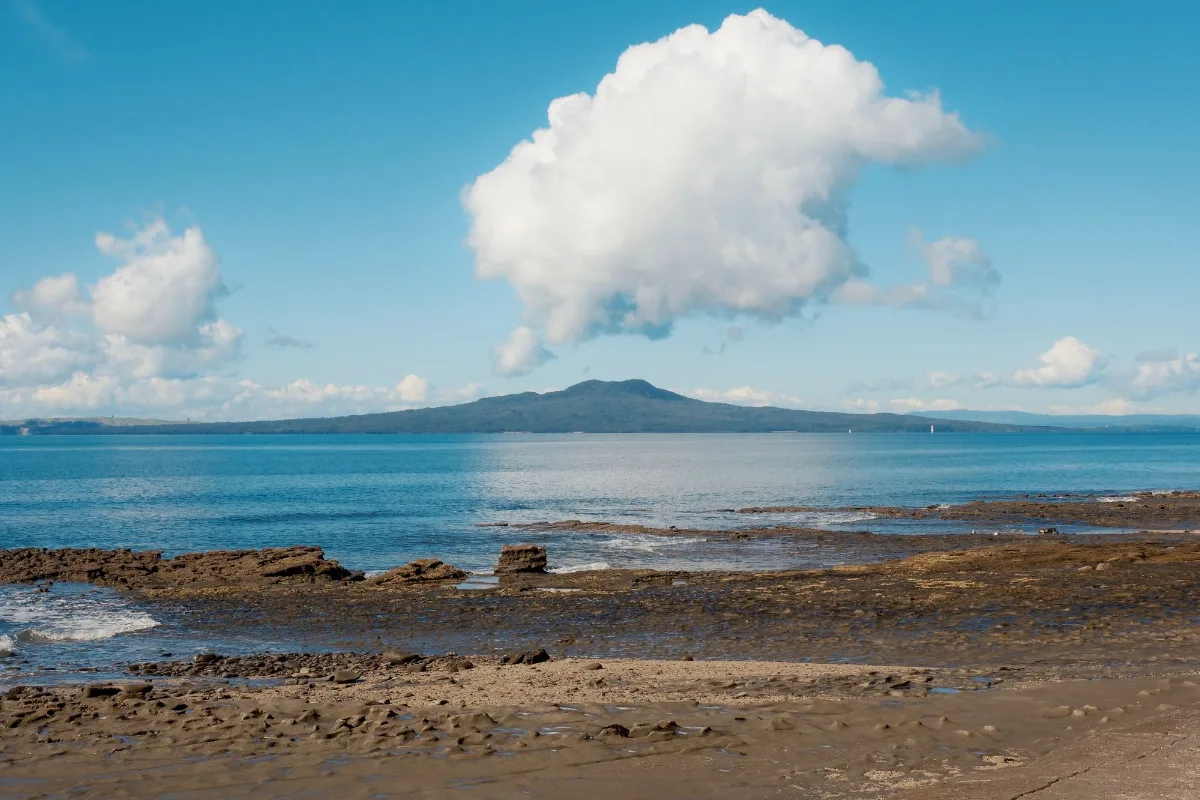
Takapuna is the North Shore’s main beach, with a long sandy shoreline, views straight across to Rangitoto Island and the town centre’s shops and cafés a short walk away. It’s popular for swimming, paddleboarding and evening walks. Takapuna has had a paid summer lifeguard service at the busiest times in recent seasons. Parking near the beach fills quickly on sunny days.
Cheltenham
Cheltenham Beach in Devonport is a favourite with local families: sheltered, sandy and gently sloping, with North Head right next to it and Rangitoto on the horizon. Like other inner-harbour beaches it’s best around high tide. If you’re coming from the city, catch the ferry to Devonport and walk over, which beats hunting for a park.
Long Bay (Te Oneroa o Kahu)
Long Bay is a regional park at the northern end of the North Shore, with about a kilometre of sand backed by big grassy areas, picnic spots and barbecues. It’s one of the best family beaches in Auckland: calm swimming, rock pools at low tide and space to spread out. The Long Bay–Okura Marine Reserve lies offshore, and the coastal track heading north leads to quieter bays. Take your rubbish home, as you do in all regional parks.
Other North Shore beaches worth knowing
Milford, Castor Bay, Mairangi Bay, Browns Bay and Campbells Bay are all good local swimming beaches. Mairangi Bay has a surf lifesaving club, and Campbells Bay was added to Safeswim’s water-quality monitoring for the 2025/26 summer.
Best west Auckland beaches: surf, black sand and big views
The west coast beaches are spectacular, and they need respect. Rips, sudden large waves and slippery rocks cause serious incidents every summer, including among strong swimmers and people fishing from the rocks. On the west coast, only swim at a patrolled beach, between the red and yellow flags, and stay out of the water if lifeguards aren’t on duty.
Piha
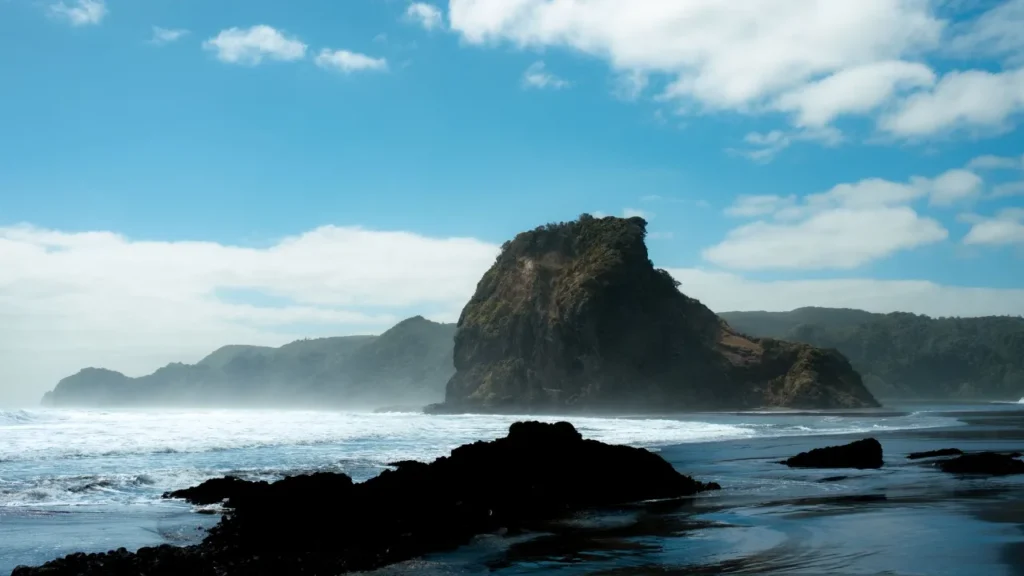
Piha is Auckland’s most famous surf beach, about an hour’s drive from the city through the Waitākere Ranges. Lion Rock sits in the middle of the black-sand beach, splitting it into North and South Piha, and both ends have lifeguard clubs. Come for the surf, the walks and the views from the clifftop tracks. Avoid the water outside patrol hours, and keep well away from rocks when big waves are running.
Muriwai
Muriwai is a huge, wild black-sand beach that runs for kilometres north of the regional park. At its southern end is one of New Zealand’s few mainland gannet colonies, at Ōtakamiro Point. The gannets nest from roughly August to March, and the viewing platforms above the colony are a short walk from the car park. The surf is powerful here, so swim only between the flags. Fires and fireworks are banned anywhere in the regional park, including on the beach.
Karekare and Te Henga (Bethells Beach)
Karekare, just south of Piha, is a dramatic, rugged beach with a short walk to Karekare Falls, which Safeswim now monitors for water quality. Te Henga (Bethells Beach) to the north is more remote, with big dunes and Lake Wainamu nearby for a freshwater alternative. Both have volunteer lifeguard patrols in summer, but conditions can be dangerous, so check Safeswim before you go.
North of the city: Ōrewa to Goat Island
Ōrewa
Ōrewa is one of Auckland’s longest beaches, a few kilometres of sand on the Hibiscus Coast with a surf club, playgrounds, cafés and a popular estuary path. It’s great for kids, walking and paddleboarding. Like other east coast beaches, Ōrewa is usually gentle, but it can get stinging jellyfish in warm spells (see the section on rashes below).
Te Hāruhi / Shakespear Regional Park
At the tip of the Whangaparāoa Peninsula, Shakespear is an open sanctuary with sheltered beaches and good swimming at Te Haruhi Bay. It’s a lovely place for a picnic and a bird-spotting walk. Dog access is restricted, so check the rules before you bring one.
Tāwharanui Regional Park (Anchor Bay)
Tāwharanui is about 90 minutes north of Auckland, past Matakana, and Anchor Bay has some of the whitest sand and clearest water in the region. The park is an open sanctuary behind a predator-proof fence, and its northern coast is a marine reserve, so fishing isn’t allowed. Dogs are banned everywhere in the park, even in cars in the car park, so leave them at home.
Goat Island Marine Reserve
Goat Island, near Leigh, is New Zealand’s first marine reserve, set up in 1975. It’s the best easy snorkelling spot near Auckland: you can see snapper and blue maomao a short swim from the beach. Only snorkel when the sea is calm, don’t feed the fish, and note that dogs aren’t allowed. You can also hire kayaks nearby.
Ōmaha
Ōmaha is a long, patrolled surf beach on the east coast near Matakana, popular with families and holiday-home owners. It’s a good choice when you want proper waves without the west coast’s dangers, though rips still form here.
East and south Auckland beaches
On the Pōhutukawa Coast, Maraetai has calm water, a playground and a wharf, and it’s a relaxed alternative to the busier city beaches. Further along, Duder Regional Park has sandy beaches and big Hauraki Gulf views (no dogs). In the far south-west, Karioitahi near Waiuku is a quiet black-sand surf beach with a summer lifeguard patrol. Treat it like any west coast beach.
Waiheke Island beaches
Waiheke is a passenger ferry ride from downtown Auckland and makes a great beach day trip. Oneroa is walkable from the village and has gentle waves; at low tide you can walk around the rocks to Little Oneroa. Onetangi is a long, open beach further east with beachfront places to eat. Check the last ferry times before you settle in for the afternoon, as summer weekends are busy.
How to check if an Auckland beach is safe to swim
The single most useful tool for Auckland beaches is Safeswim, run by Auckland Council with Surf Life Saving New Zealand, Watercare and health agencies. It’s free on the website and as an app, and covers 163 beaches, lagoons, streams and lakes. It shows:
- Water quality and alerts, including wastewater overflows after rain
- Lifeguard patrol times at patrolled beaches
- Hazard warnings such as rip currents, dangerous waves, jellyfish or shark sightings
- Tides, weather and water temperature
Auckland Council says the beaches were suitable for swimming 84.5% of the time last summer, and that Safeswim’s forecasts were 93% accurate. The main thing to remember: water quality can drop after heavy rain, when stormwater and sometimes wastewater flow into the sea, even if the beach looks fine. A couple of spots, such as Jenkins Bay near Titirangi, have long-term warnings, so don’t swim there at all.
Lifeguards and swimming between the flags
Surf lifeguards in the Auckland region usually patrol on weekends and public holidays from around Labour Weekend to Easter, with paid weekday patrols at the busiest beaches through the summer holidays. Piha and Muriwai have the longest weekday season (in 2025/26 it ran until 6 March). Exact times vary by beach and day, so check the patrol times on Safeswim before you go.
Beaches with surf lifeguard clubs or patrols include Muriwai, Te Henga (Bethells), North and South Piha, Karekare, Karioitahi, Ōmaha, Ōrewa, Red Beach, Long Bay, Mairangi Bay and Takapuna. The flags mark the safest area being watched; lifeguards won’t put them where there’s a rip.
If you get caught in a rip
Rips are behind about 80% of Surf Life Saving NZ’s rescues. Remember the 3 Rs:
- Relax and float to save energy. A rip won’t pull you under, it takes you out.
- Raise your hand to signal for help.
- Ride the rip until it weakens, then swim back or wait for help.
If you see someone in trouble, call 111 and ask for Police. Don’t swim out yourself unless you have something that floats and know what you’re doing.
Sea lice, stingers and the rash after swimming
Most summers, some east coast beaches (in recent years including Takapuna, Milford and Ōrewa) get reports of an itchy red rash after swimming. People call it “sea lice”, but it’s usually seabather’s eruption, caused by tiny stinging jellyfish and anemone larvae that get trapped under swimwear. Real sea lice tend to bite exposed skin instead.
Auckland Regional Public Health Service says children are the most affected and the rash can last a week or more. Calamine lotion, antihistamines and mild steroid creams can help, but see a doctor or pharmacist if a child becomes unwell. To lower the risk, take your togs off and shower soon after swimming, and check Safeswim, which shows caution warnings when outbreaks are reported.
Dogs on Auckland beaches: the summer rules
Many Auckland beaches have a “time and season” rule. On those beaches, under Auckland Council’s Policy on Dogs, the summer restriction applies from 10am to 5pm between 1 December and 1 March, and dog access is more generous the rest of the year. Each beach has its own rule (off-leash, on-leash or prohibited), and some places ban dogs completely, including Tāwharanui, Goat Island and Duder Regional Park. At Muriwai, dogs can be off leash in the northern beach areas but are largely prohibited elsewhere in the park.
Before you go, look up the specific beach on Auckland Council’s website. The rules are enforced, and the busiest beaches get the most complaints.
Tips for a good Auckland beach day
- Check the tide. Inner-harbour beaches like Pt Chev and Cheltenham are much better near high tide.
- Go early on hot weekends. Parking at Mission Bay, Takapuna, Piha and Muriwai fills fast.
- Be sun smart. NZ summer sun burns quickly, even when it’s cloudy and windy.
- Wait after heavy rain. Check Safeswim for the next day or two after a big downpour.
- Take your rubbish home, especially in regional parks, which have few or no bins.
- Know the summer holiday crowds. School holidays run from mid-December to late January, so beaches are busiest then.
Where to next
Planning more summer outings? See our guides to free things to do in Auckland, Christmas lights in Auckland, Christmas in the Park and New Year’s Eve in Auckland. For when to expect warm water, see New Zealand weather through the year, and if you’re driving out to the west coast as a visitor, read driving in New Zealand for foreigners.
FAQs
What is the best beach in Auckland?
It depends on what you want. For an easy city swim, Mission Bay and Takapuna are hard to beat. Long Bay and Ōrewa are the best all-round family beaches. Piha and Muriwai are the most spectacular, but only swim there between the flags. For clear water and snorkelling, drive north to Tāwharanui or Goat Island.
Which Auckland beaches are safe to swim at?
Sheltered east coast beaches such as Mission Bay, St Heliers, Takapuna, Cheltenham, Long Bay and Ōrewa are usually calm. Water quality changes, especially after heavy rain, so check Safeswim on the day. On the west coast, only swim at patrolled beaches between the red and yellow flags.
When are Auckland beaches patrolled by lifeguards?
Volunteer surf lifeguards usually patrol on weekends and public holidays from around Labour Weekend to Easter. Paid weekday patrols run at the busiest beaches over the summer holidays, with Piha and Muriwai patrolled on weekdays the longest. Check Safeswim for the exact times at each beach.
Can I take my dog to Auckland beaches in summer?
Often, but not all day. On beaches with a time and season rule, dogs are restricted from 10am to 5pm between 1 December and 1 March. Some places, including Tāwharanui, Goat Island and Duder Regional Park, ban dogs completely. Check the rule for your beach on Auckland Council’s website.
Why do I get a rash after swimming at Auckland beaches?
It’s usually seabather’s eruption, caused by tiny stinging jellyfish and anemone larvae trapped under swimwear, rather than sea lice. Children are most affected and it can last a week or more. Change out of your togs and shower soon after swimming, and see a pharmacist or doctor if it’s severe.
What is the closest good beach to Auckland CBD?
Mission Bay on Tāmaki Drive is the classic choice, a short drive or bus ride from downtown. Point Chevalier is also close but best at high tide. Cheltenham in Devonport is an easy ferry ride plus a short walk.
Are west Auckland beaches dangerous?
They can be. Piha, Muriwai, Karekare and Bethells have powerful surf, rips and sudden large waves, and serious incidents happen every summer, including from rock fishing. Swim only between the flags when lifeguards are on duty, and if you get caught in a rip, relax and float, raise your hand and ride the rip.
Sources
Checked 13 November 2026. Patrol times, water quality and dog rules change, so check the official sites before you go.
- Safeswim (water quality, patrol times and hazards)
- Safeswim rolls out expanded coverage for summer (Dec 2025) – OurAuckland
- Policy on Dogs 2025 – Auckland Council
- Muriwai Regional Park – Auckland Council
- Tāwharanui Marine Reserve – DOC
- Cape Rodney-Okakari Point Marine Reserve (Goat Island) – DOC
- A guide to Auckland’s regional parks – Tātaki Auckland Unlimited
- Surf Life Saving New Zealand
- Seabather’s eruption rash at Auckland beaches (Jan 2025) – RNZ

Written by Alex · Founder, NZ Life Help
Alex moved to New Zealand from the UK in 2019 and has lived in Auckland and the South Island. He started NZ Life Help in 2026 to give newcomers and locals the clear, practical answers he couldn’t find when he arrived. Guides are checked against official sources and updated when the rules change.